How to Stop a Kitten Scratching Furniture: Redirect, Don’t Punish
Help a kitten choose a better scratch spot by matching the surface and direction, placing scratchers well, and protecting favorite furniture.
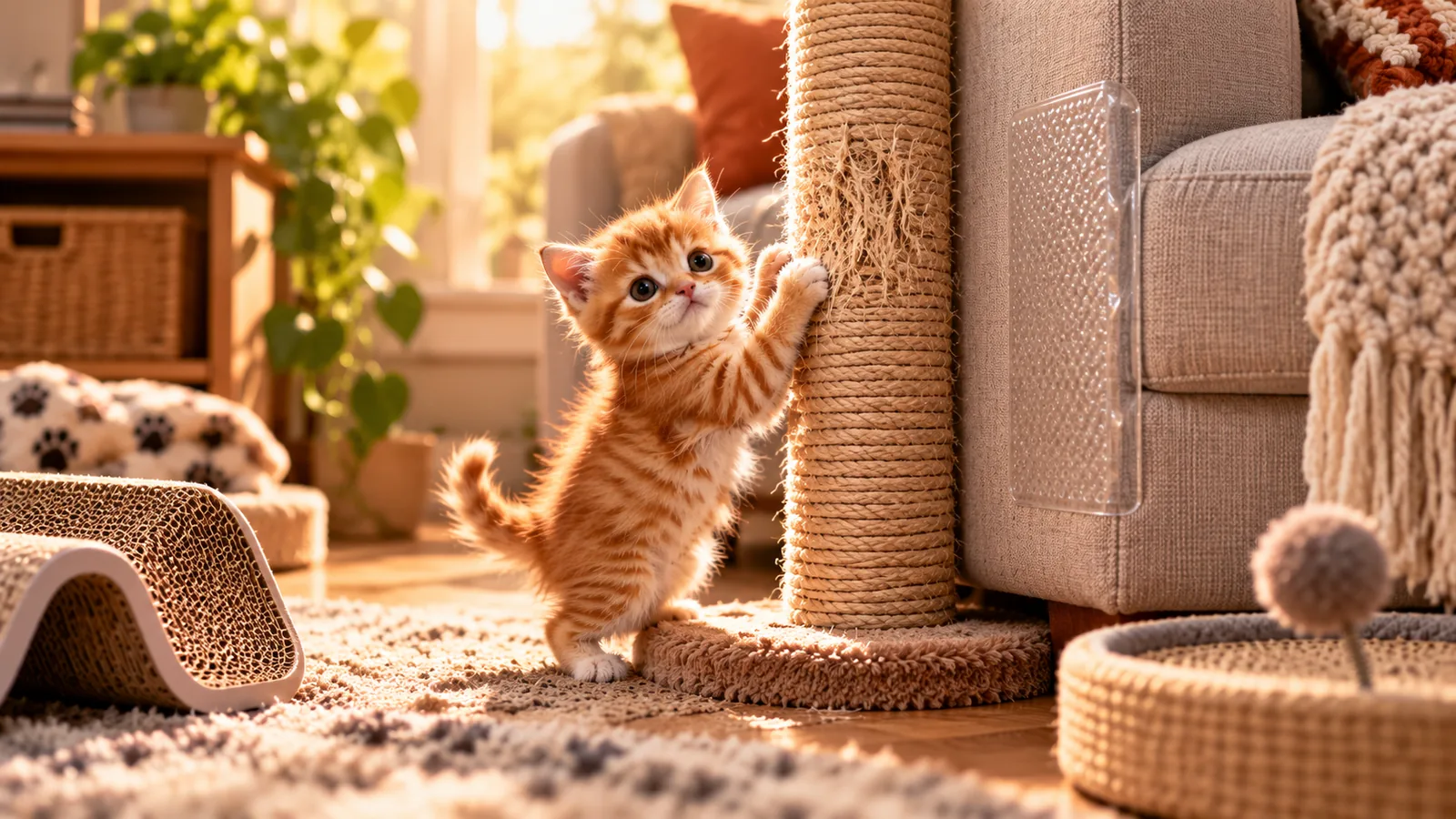
Illustrative image. For individual health concerns, follow advice from a veterinarian who knows your kitten.
Scratching is normal cat behavior. It helps cats stretch and maintain their claws, and it can mark familiar places. The workable plan is to make the right scratcher easy to choose and the sofa less rewarding.
1. Notice what your kitten already likes
Is the target vertical or horizontal? Does your kitten choose woven upholstery, carpet, cardboard, or a doorframe? Pick a scratcher that resembles the preferred direction and texture. A short, wobbly post is easy to ignore; choose a stable option that allows a comfortable stretch.
2. Put the scratcher by the current target
Place it directly beside the sofa corner, rug edge or doorway that is getting attention. Once it is used consistently, move it gradually if you want it elsewhere. If there are several favorite places, provide more than one scratch option.
3. Make the good choice rewarding
Offer play around the scratcher, praise calm investigation and reward use. Some cats respond to catnip, but it is optional and kittens may not care about it. Never drag the kitten’s paws over the surface; that can make the scratcher feel threatening.
4. Protect the furniture while habits form
Use a furniture cover or a temporary barrier on the target. Keep nail tips trimmed if your kitten tolerates it. Offer daily interactive play and climbing options. If using adhesive products, check that they are designed for the surface and cannot be chewed or swallowed.
Skip punishment and declawing
Yelling or startling may make a kitten wary without teaching where scratching is allowed. Declawing is not a behavior fix; discuss humane options with your veterinarian if scratching creates a safety or medical concern.
Nail trimming, gently → · Browse enrichment ideas →
Source
Last updated October 4, 2026. This guide is general information and does not replace veterinary advice.