Kitten Carrier Training: Make the Carrier Part of the Furniture
A gradual carrier-training plan for vet visits and short trips, plus simple safety checks before leaving home.
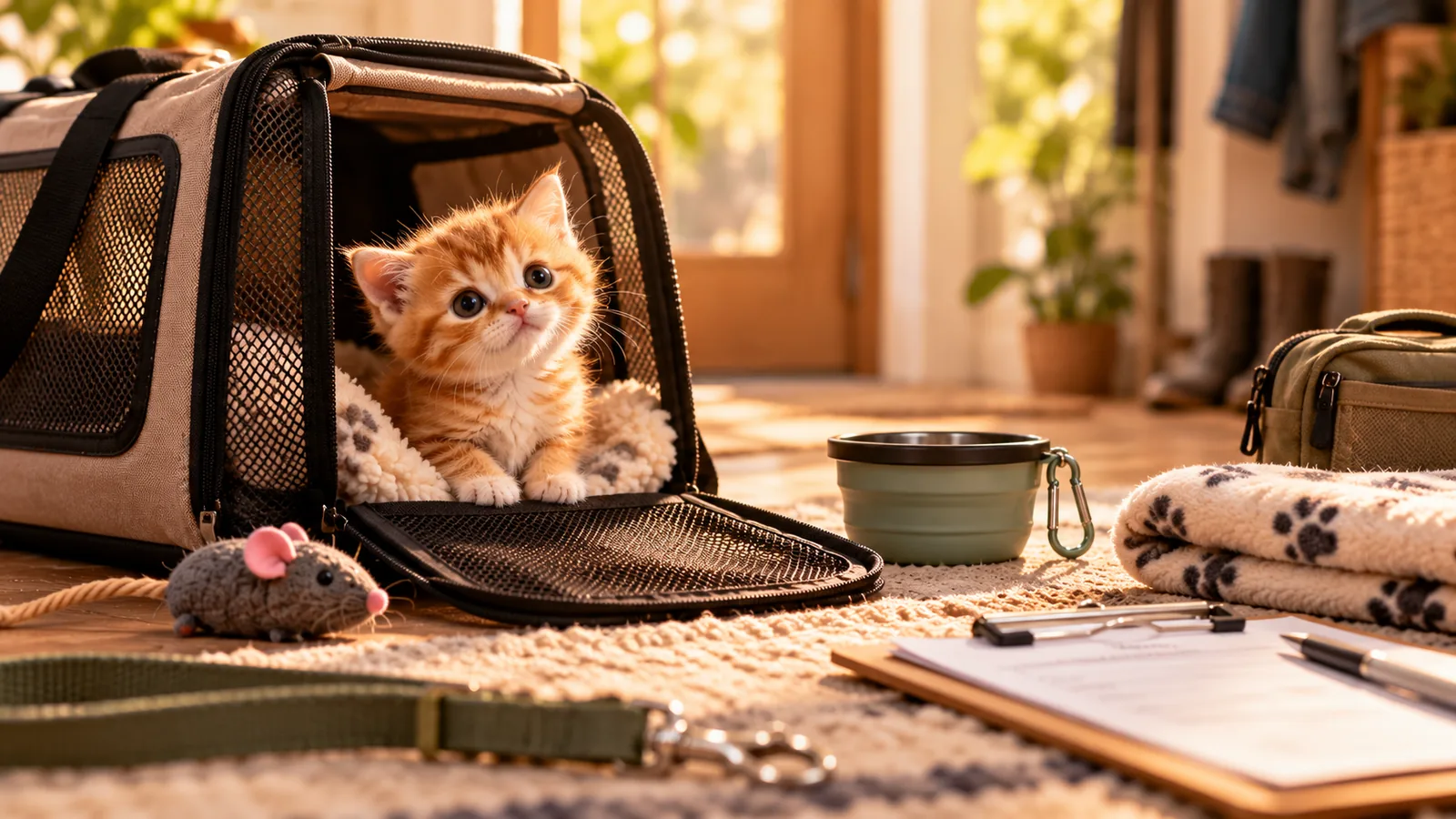
Illustrative image. For individual health concerns, follow advice from a veterinarian who knows your kitten.
If the carrier appears only right before a car ride, many kittens learn that it predicts a stressful event. Leave it out as a familiar hiding place and let the kitten investigate on its own schedule.
Pick a carrier that works for real trips
Choose a sturdy carrier that closes securely, has good ventilation and is easy for you to carry. A top-opening or removable-top design can make veterinary exams easier. Check latches, handles and seams before use. The carrier should allow the kitten to turn around and settle comfortably.
Build familiarity in small steps
- Leave the carrier open in a quiet room with familiar bedding inside.
- Drop treats or toys near it, then gradually just inside the entrance.
- Let your kitten come and go. Do not force the door closed during early sessions.
- When the kitten rests inside comfortably, close the door briefly, reward, and reopen.
- Practice lifting the carrier for a few seconds, then set it down and reward.
- Only after those steps are calm, practice short safe trips and return home.
Before a vet or car trip
Secure the carrier so it cannot slide or tip. Never let a kitten roam loose in a moving vehicle. Keep the car quiet and temperature comfortable. If the kitten gets carsick or panics, tell your veterinarian before the next trip; ask about an individualized plan.
Do not leave a kitten unattended in a parked car. Travel rules and airline requirements vary, so check the carrier and documentation requirements with the carrier or transport provider well in advance.
First vet visit checklist → · New kitten starter guide →
Source
Last updated October 4, 2026. This guide is general information and does not replace veterinary advice.