I Just Acquired a Criminal: The New Kitten Starter Guide
First night, first 48 hours, early vet planning and a practical buy-now/buy-later checklist for a kitten settling into a new home.
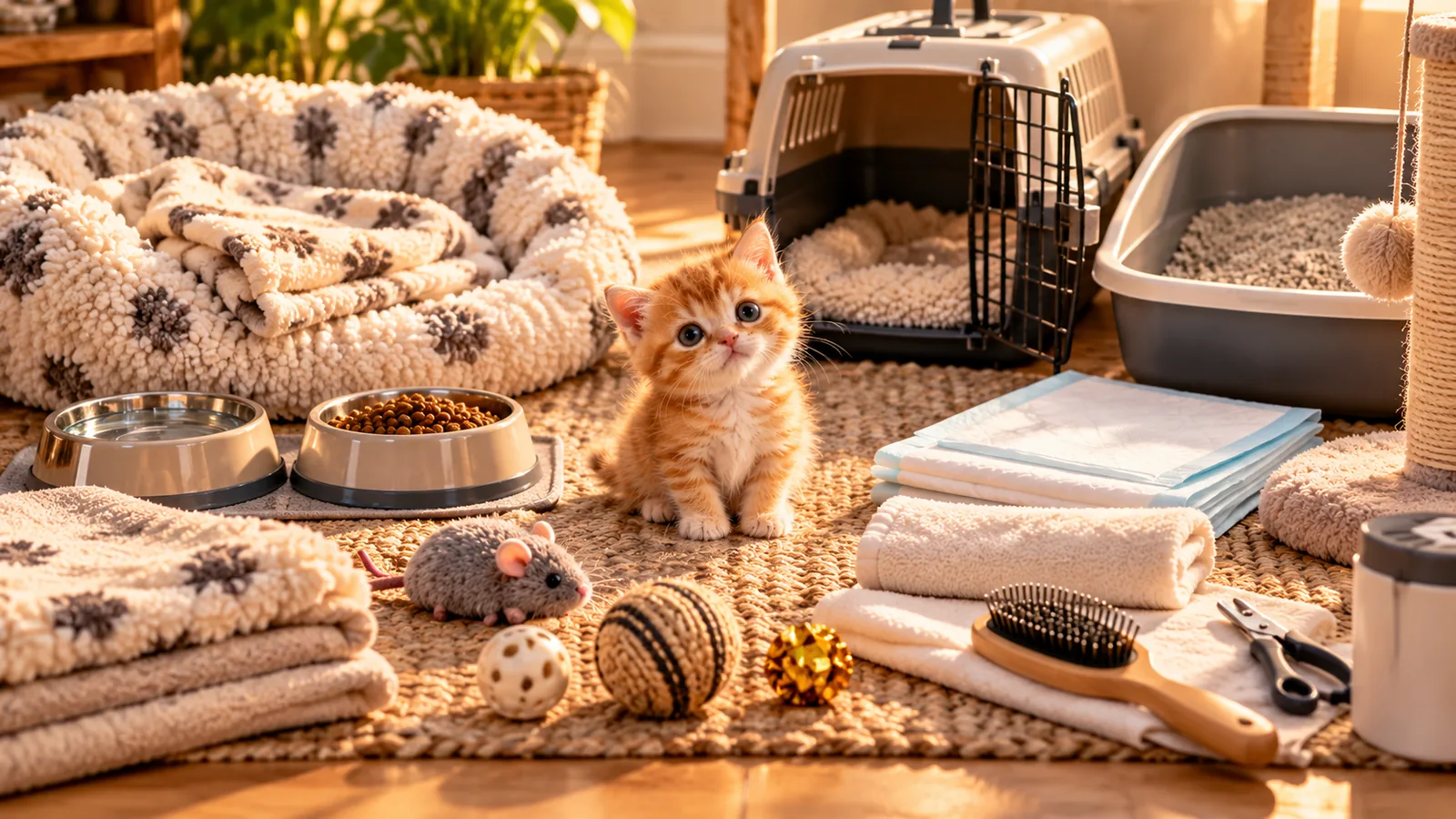
Illustrative image. Every kitten has different needs; ask your veterinarian or rescue team about the individual animal.
The first night: one quiet safe room
Start with a small, kitten-safe room where food, water, litter, a bed and a hiding place are easy to find. Keep windows secure and remove cords, small swallowable objects, medications, cleaning products and plants that may be unsafe. Let the kitten choose when to explore. A hideaway is a coping tool, not a failure.
If there are other pets, use gradual introductions and separate resources. Don’t force a face-to-face greeting on day one.
The first 48 hours
- Keep the same food at first, if you know what the kitten has been eating. Ask the rescue for brand, portion and schedule.
- Show where the litter box is. Keep it accessible and use familiar litter if available.
- Offer fresh water and observe appetite, energy, stool and litter habits without hovering.
- Let the kitten sleep. Short, gentle play is fine when the kitten is interested.
- Book a veterinary appointment and bring records, medications and questions.
Buy now: simple essentials
- Secure carrier that closes reliably.
- Complete kitten food the kitten already tolerates, then transition only with a plan.
- Low, easy-to-enter litter box and unscented litter if consistent with what the kitten knows.
- Food and water bowls, washable bedding and a hiding place.
- Stable scratcher and simple interactive toys. Put wand toys away after play.
Wait until you know the kitten
Automatic litter boxes, expensive cat trees, elaborate fountains, subscription boxes and piles of toys can wait. Learn the kitten’s habits and your home layout before buying specialty gear. For optional gear, compare cleaning, replacement-part cost, size and return policy—not just the product photo.
Feeding and litter: make changes slowly
Use a food labeled complete and balanced for kitten growth and ask your veterinary team about portions and meal frequency. Keep fresh water available. If you change food, transition gradually based on veterinary guidance. If the kitten is not fully weaned, do not guess at formula or feeding technique; contact a veterinarian or experienced rescue.
Keep the litter area quiet and easy to reach. Scoop regularly. If the kitten repeatedly avoids the box, has pain, strains or produces little/no urine, contact a veterinarian.
Kitten-proof one room at a time
Secure cords, close appliance doors, check recliners and laundry, put away medications and cleaning supplies, and confirm that windows/screens latch securely. Check every houseplant against the ASPCA’s cat plant list; keep lilies out of a cat home. Don’t assume a plant is safe because a kitten has ignored it so far.
Your first vet visit
Ask about age and weight, vaccine timing, parasite care, nutrition, microchipping, spay/neuter timing and symptoms that merit urgent care. The right schedule depends on the kitten’s age and records. Use the visit to ask for a demonstration of nail trimming or carrier handling.
Make the checklist yours
These checkmarks stay in this browser on this device. They are not sent to us.
Useful sources
- ASPCA: home safety before a kitten arrives
- ASPCA: toxic and non-toxic plant list for cats
- Cornell Feline Health Center: caring for a new cat
Last updated October 4, 2026. General information, not a substitute for veterinary care.