How to Trim a Kitten’s Nails Without Making It a Wrestling Match
A calm, gradual approach to paw handling and nail trims, with clear signs to pause and ask a veterinary professional for help.
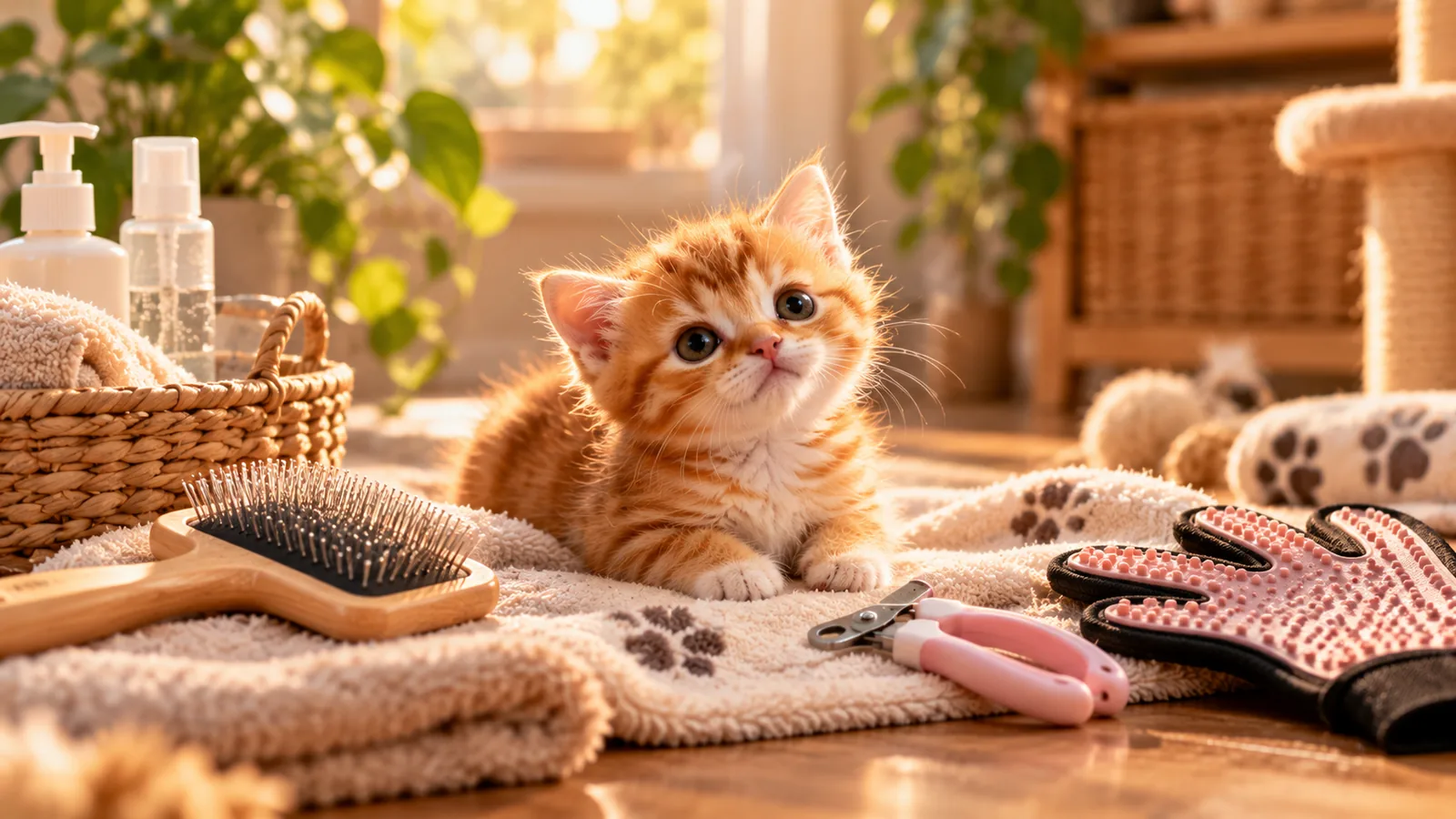
Illustrative image. For individual health concerns, follow advice from a veterinarian who knows your kitten.
The goal of a kitten nail trim is a tiny maintenance session, not a full manicure at any cost. Start by making paws feel ordinary. If your kitten resists, stop while things are still calm and try again another day.
Get familiar before you trim
Choose a quiet moment when your kitten is relaxed. Briefly touch a shoulder, leg and paw, then reward calm behavior with a treat, meal or gentle play. Build up over several sessions. Let the kitten investigate the clipper while it is closed.
What to have ready
- Small cat nail clippers in good condition.
- A bright light and a comfortable, nonslip place to sit.
- A few favorite treats and a towel if it helps your kitten feel secure.
- Styptic powder nearby in case a nail is accidentally nicked. Ask your vet how to use it.
A low-pressure trim, one nail at a time
- Hold the paw gently; do not squeeze or pin the kitten down.
- Press lightly on a toe pad to extend one claw.
- Identify the pink quick inside the nail. Trim only the sharp transparent tip, well away from the quick.
- Reward, then decide whether to continue. One or two nails can be a successful session.
If the nail is dark and you cannot see the quick, if your kitten struggles, or if you are unsure where to cut, ask a veterinary team to demonstrate. Never cut into the pink tissue.
Make furniture less tempting with better options
Scratching is normal. Give your kitten a stable scratcher that matches the preferred direction and texture, and place it near the spot the kitten already chooses. Reward use. A nail trim can reduce sharp tips, but it will not remove the need to scratch.
Read the furniture-scratching guide → · Browse grooming basics →
Sources
Last updated October 4, 2026. This guide is general information and does not replace veterinary advice.