Kitten Travel and Carrier Training: A Gentle Step-by-Step Plan
Prepare a kitten for carrier trips with positive, gradual practice and a few safety checks.
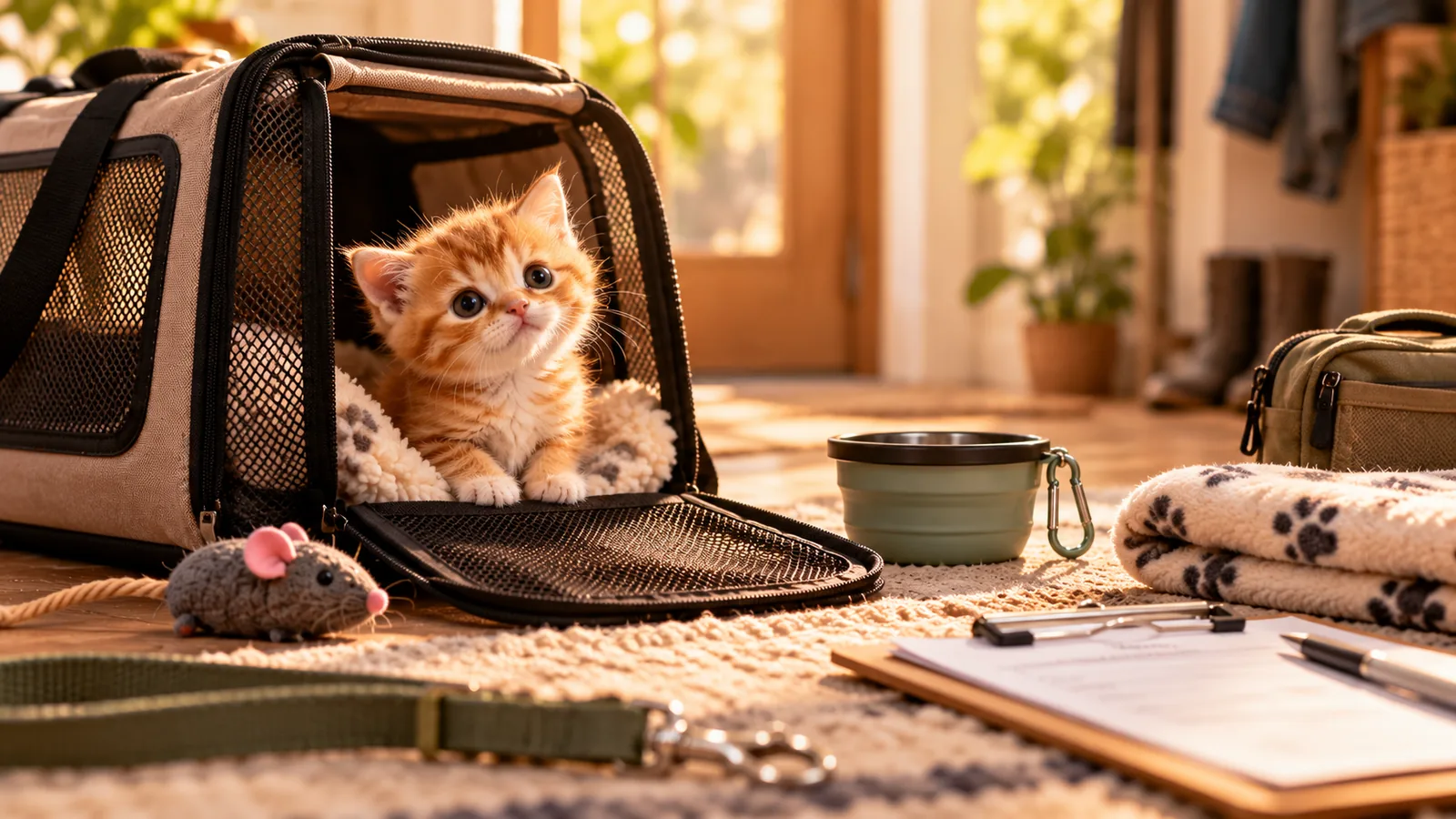
Illustrative image. For individual health concerns, follow advice from a veterinarian who knows your kitten.
Travel preparation begins at home. Let a carrier become an ordinary resting place before you need to use it, then add movement in small steps.
Set up a safe practice station
Choose a secure, ventilated carrier with reliable closures. Put familiar bedding inside and leave the door open in a quiet area. Check for sharp edges, loose parts or damage. A towel can be useful for comfort and to absorb accidents.
Practice by tiny increments
- Reward calm interest around the carrier.
- Place treats farther inside over several sessions.
- Let the kitten rest inside with the door open.
- Close the door for a second, reward and reopen; gradually build duration only while calm.
- Lift the carrier briefly, set it down, and reward.
- Try a short car ride only after earlier steps are comfortable.
Keep sessions short and stop if the kitten is panicking. Go back to an easier step later. If your kitten has motion sickness or severe distress, ask a veterinarian for a plan.
Travel safety basics
- Secure the closed carrier so it cannot slide around.
- Keep the kitten inside the carrier in vehicles and unfamiliar places.
- Do not leave the kitten alone in a parked vehicle.
- Check current transport or airline rules before a longer journey.
For routine veterinary trips, call the clinic if you need advice on timing, food, medication or a particularly nervous kitten. Do not give calming medication unless it is prescribed for this animal.
Carrier training guide → · First vet visit checklist →
Source
Last updated October 4, 2026. This guide is general information and does not replace veterinary advice.