Kitten Feeding Schedule: Build a Routine Around Age and the Food Label
A practical feeding routine for growing kittens, with a reminder to use the kitten’s age, food label and veterinary advice rather than a one-size schedule.
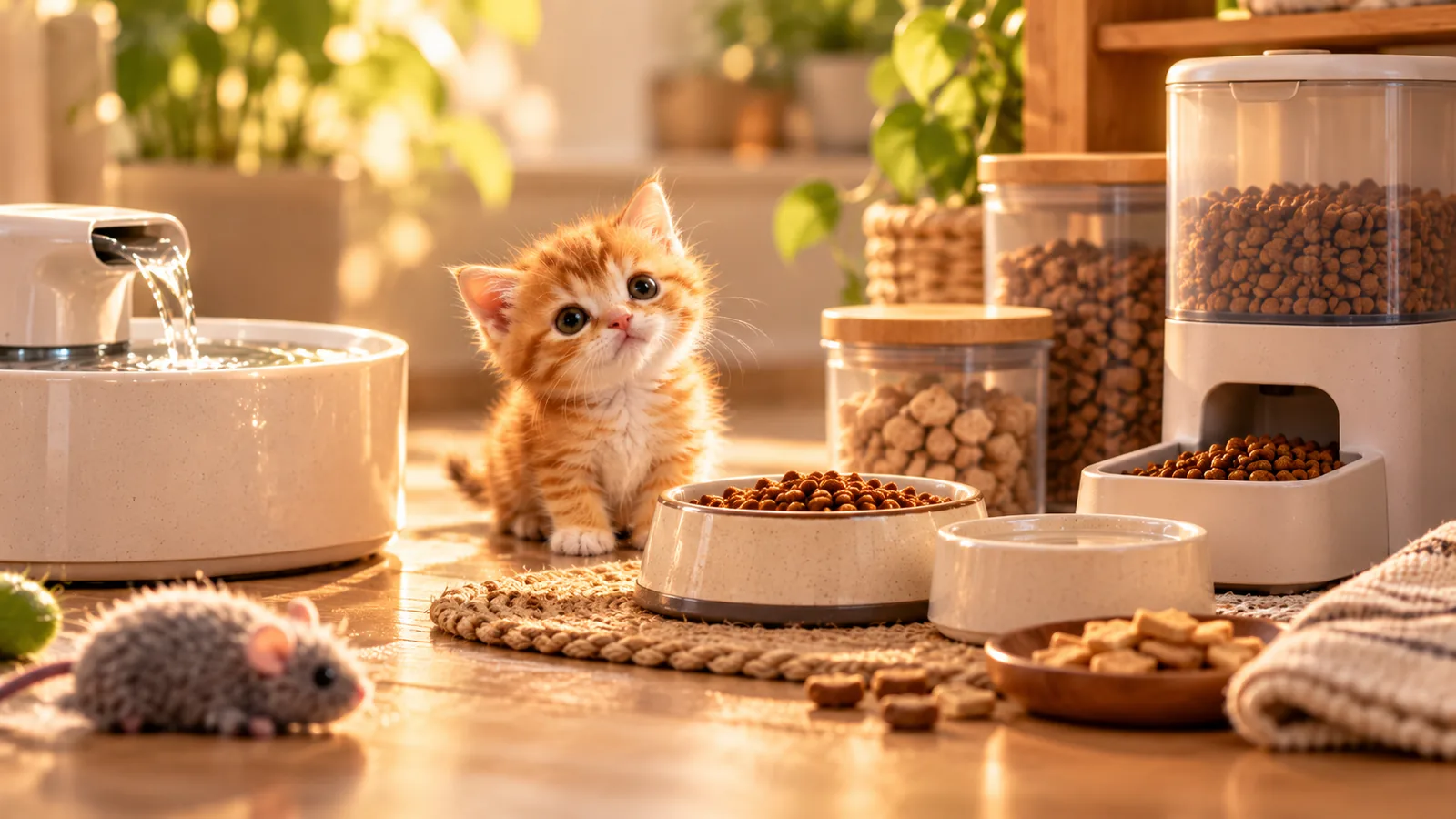
Illustrative image. For individual health concerns, follow advice from a veterinarian who knows your kitten.
Kittens grow quickly, but the right meal plan depends on age, body condition, food type and health. Use a complete diet labeled for kitten growth and ask your veterinarian how much to offer and how often.
Start with what the kitten already eats
Ask the shelter, foster or prior caregiver for the exact food and routine. Sudden changes can upset some kittens. If you want to transition, ask your veterinary team how to do it gradually and watch appetite and stool.
A routine is better than a rigid internet chart
Very young kittens need specialized feeding support from a veterinarian or experienced rescue. Weaned kittens can generally be offered measured meals on a predictable schedule; the number and portion size should follow the food’s life-stage directions and your veterinary team’s guidance. Keep fresh water available.
Use the package feeding guide as a starting point, not a diagnosis. Kittens differ in size, activity and medical needs. Recheck the plan at routine visits as your kitten grows.
Keep an eye on appetite, not just the bowl
- Measure what you offer so you can notice meaningful changes.
- Track weight on a schedule recommended by your vet.
- Store food according to the label and keep water bowls clean.
- Introduce new foods one at a time so you can notice what changed.
Questions for the clinic
Ask whether the food is complete and balanced for growth, the right daily amount, meal frequency, whether wet and dry food can both fit the plan, and what to do if the kitten misses meals. A kitten that is not eating or seems unwell needs prompt professional advice, especially if very young.
New-kitten essentials → · Questions for the first visit →
Further reading
Last updated October 4, 2026. This guide is general information and does not replace veterinary advice.