Best Water Fountains for Kittens: What Matters Before You Buy
A practical comparison checklist for choosing a cat fountain, with cleaning, stability and kitten-safety factors ahead of flashy features.
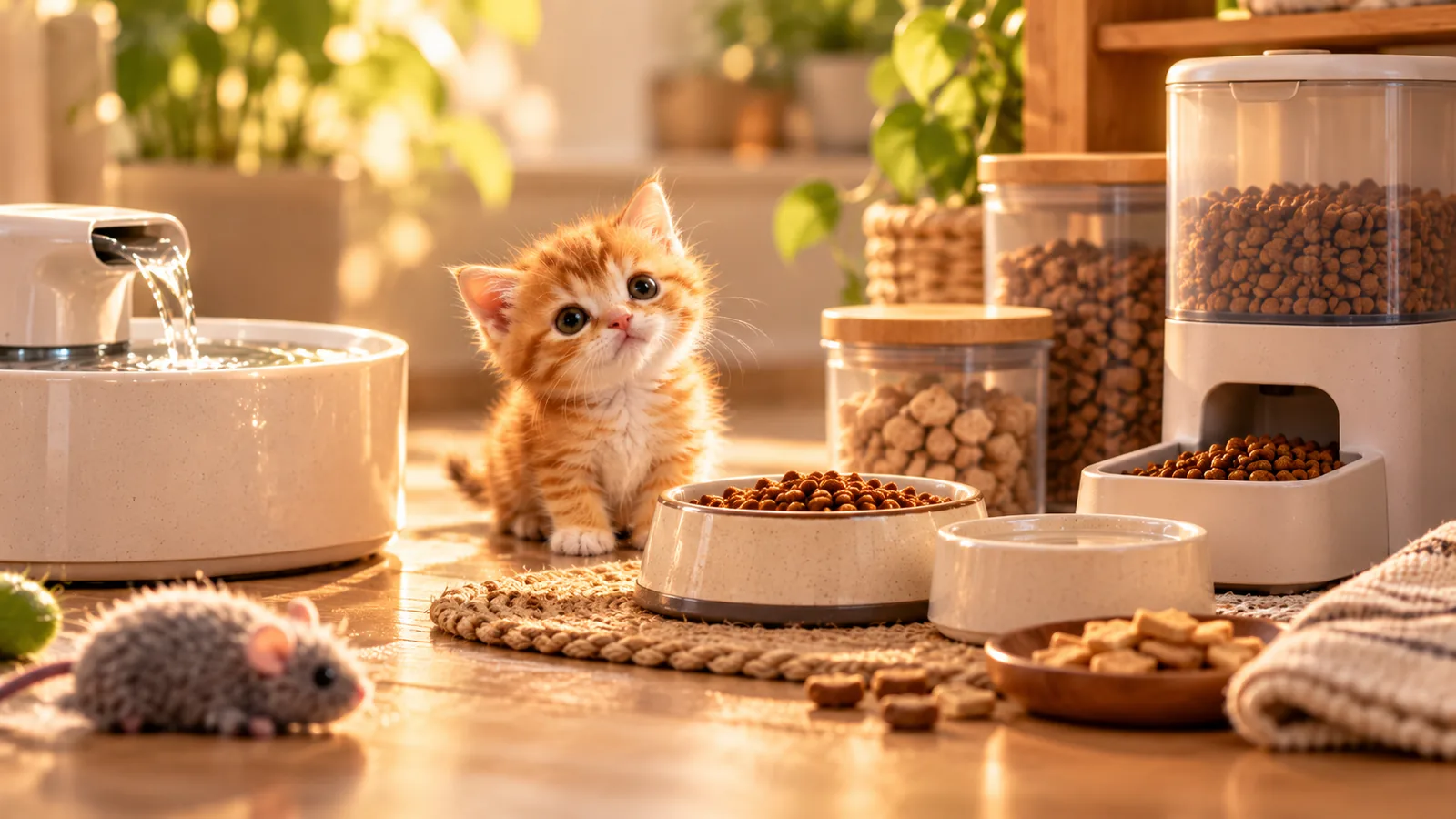
Illustrative image. For individual health concerns, follow advice from a veterinarian who knows your kitten.
A fountain can make moving water available, but it is optional. A clean, stable bowl of fresh water is a perfectly good starting point. If you shop for a fountain, choose one that is easy to clean and simple to keep running.
What to compare
| Feature | Why it matters | Check before buying |
|---|---|---|
| Easy disassembly | Fountains need regular cleaning, not just a refill. | Can you reach the pump area and remove parts without tools? |
| Stable, low profile | A small kitten may paw or lean against it. | Does the base resist tipping? Are edges smooth? |
| Replacement filters | Filters are recurring cost and availability matters. | Check the exact compatible filter and current price. |
| Quiet operation | Noise can put off a cautious pet. | Look for reports about pump noise and water splash. |
| Material | Material affects cleaning and durability. | Follow the manufacturer’s care instructions. |
How to introduce one
Set it near, but not directly beside, food or litter. Keep the familiar water bowl available while your kitten decides. Rinse and assemble the fountain as instructed, and never allow the water level to fall below the minimum needed for the pump.
Skip the fountain if maintenance becomes a chore
Standing water still needs attention: wash bowls and refresh water regularly. If a kitten’s drinking changes sharply, seems dehydrated, or has other symptoms, contact a veterinarian instead of assuming a fountain will solve it.
Shop thoughtfully
Measure the space, check replacement-filter cost, review cleaning instructions and read recent product details. Broad category browsing is useful here because size, material and replacement parts vary by model.
Browse category options on Amazon →
Further reading
Last updated October 4, 2026. This guide is general information and does not replace veterinary advice.